How Native Cigarettes Are Made
Last updated: June 8, 2026
TL;DR
Native cigarettes are manufactured on First Nations reserves across Ontario and Quebec using imported tobacco leaf, full-scale rolling machines, and pre-cut filter material. The process mirrors big-tobacco production but skips the federal excise tax stamp – which is why a carton costs $35-$55 on reserve versus $130+ duty-paid in a city. Most reserves use modern automated lines producing 1,500-3,000 cigarettes per minute under their own brand names.
What is a native cigarette?
A native cigarette is a cigarette manufactured on a First Nations reserve in Canada under the tax-exempt status that Indigenous-owned manufacturing operations hold for sales on reserve. The product itself is a regular tobacco cigarette – same tobacco leaf, same paper, same filter. The price difference is entirely the federal and provincial excise tax that reserve-made cigarettes are not required to carry when sold reserve-to-reserve or to status holders. Our buying guide covers the legal side.
Where does the tobacco come from?
Most reserves import bulk tobacco leaf from the United States (Virginia, Kentucky, North Carolina) or international suppliers (Brazil, Mexico, Zimbabwe). The leaf arrives pre-cured – flue-cured Virginia for lighter blends, Burley for fuller body. Ontario reserves sometimes use Canadian-grown tobacco from southwestern Ontario producers. The blend ratio is usually 70-80% Virginia, 20-30% Burley, with occasional Oriental leaf added for premium brands.
How is the tobacco prepared?
Bulk leaf goes through several steps before it can be rolled:
- Moistening – dry leaf is sprayed with water and humectants to a 12-14% moisture target so it cuts cleanly
- Stem removal – large veins and stems are stripped out, kept separate for cheaper blends or recon leaf
- Cutting – mechanical cutters shred the leaf to roughly 0.6-1.0 mm wide strands
- Casing and flavouring – menthol, sweeteners, or proprietary brand flavour blends added at this stage
- Drying back – moisture brought down to 10-12% for storage and rolling
What machines roll them?
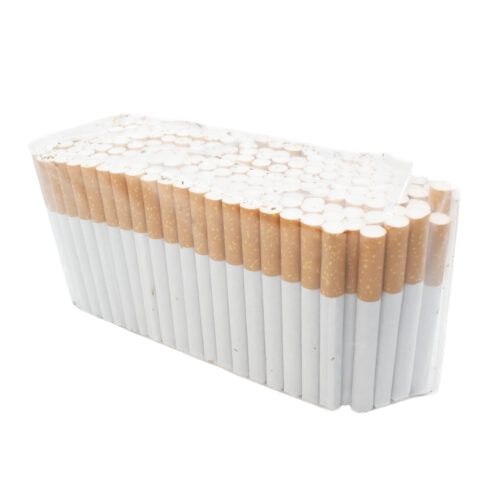
Reserve operations use the same industrial cigarette-making machines as major manufacturers – Hauni, Molins, or refurbished older units. These machines take prepared tobacco, paper, and pre-cut filter plugs as inputs and produce finished cigarettes at 1,500-3,000 sticks per minute. Output cigarettes are mechanically identical to mainstream brands – same paper density, same filter compression, same circumference.
Where do the filters and paper come from?
Filter plugs are bought from industrial filter manufacturers like Filtrona or Acetate Products. The plugs arrive pre-cut to standard 21 mm length and 7.8 mm diameter. Cigarette paper comes from specialty rolling-paper mills – Glatfelter or Schweitzer-Mauduit. Both inputs are commodity products sold openly to any cigarette manufacturer. Reserve buyers pay the same per-unit price as mainstream brands.
What about the brand and packaging?
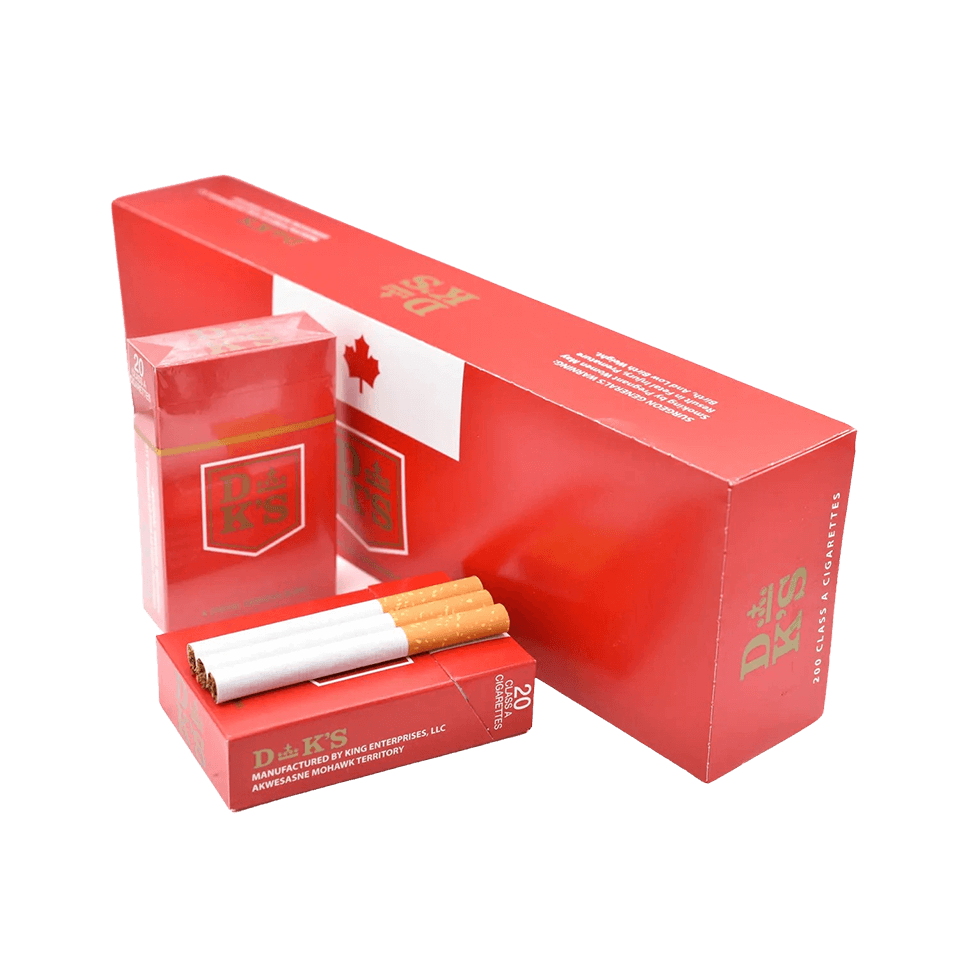
Each reserve operation has its own brand portfolio. Common Ontario reserve brands include Putters, Sago, DK’s, Rolled Gold, and Native. Quebec reserve brands include Marlins and Indian. Packaging is printed on the same kraft and offset presses any commercial printer uses. Reserve-made packs do not carry the federal plain-packaging requirements that duty-paid cigarettes must – so reserve brands keep their logo art and branding visible.

How is the price so low?
Two factors:
- No federal excise tax – the federal stamp adds $0.35-$0.40 per cigarette ($7-$8 per pack) to mainstream brands. Reserve cigarettes sold on reserve are exempt under section 87 of the Indian Act.
- Lower overhead – smaller marketing budgets, no provincial retail markup chains, no shareholder dividends
The base manufacturing cost (leaf + paper + filter + labour + machine time) for a pack of cigarettes is roughly $1.50-$2.00. Tax adds the rest. Strip the tax and the per-pack cost stays manageable.
Are reserve cigarettes the same quality?
Yes, in raw material terms – same leaf, same paper, same filter. Differences come from blend choices and quality-control intensity. Premium reserve brands invest in tighter moisture control and cleaner leaf grading. Budget reserve brands cut corners on stem removal and blend with cheaper recon leaf. Smokers who switch from duty-paid to reserve typically notice the brand-specific blend more than any reserve-versus-duty-paid pattern.
What does Health Canada regulate?
Federal tobacco regulations technically apply to all tobacco sold in Canada, but enforcement on-reserve is a jurisdictional grey zone. Reserve cigarettes do not carry the graphic health warnings federal regulations require for duty-paid brands. The official rules are documented at the Health Canada tobacco legislation page.
Is the manufacturing process safer than big-tobacco?
The manufacturing process is the same. The cigarettes are not safer to smoke. The health risks of inhaling tobacco smoke – tar, carbon monoxide, 70+ identified carcinogens – exist regardless of where the cigarette was made. Price is the only meaningful difference for the end smoker.
Sources
- Auditor General of Ontario. Annual Report on Tobacco Tax Programs, 2022.
- Canadian Tax Foundation. Contraband Tobacco in Canada policy paper, 2021.
- Indigenous Services Canada section 87 Indian Act tax exemption guidance.
- Health Canada Tobacco Products Regulations, 2024.